BIKE STUFF & KIT | 31/01/2017
| By Marmot Tours
| 6 Minutes Read
Best road bike wheels for cycling in the mountains
Bike Stuff & Kit
Different wheels for different terrains
With summer on the horizon and our training plans in full swing (well, for some of us anyway!), thoughts naturally turn to bikes and equipment choice.
Here at Marmot Tours we’ve seen thousands upon thousands of bikes on our trips over the years and have picked up a thing or two about what does or doesn’t work on mountain roads, and why.
In this article we’re going to focus purely on wheels, and the standard clincher type found on most road bikes.
Are carbon wheels really the right choice?
We all see the pros riding their super-lightweight carbon bikes up and down the mountain passes at incredible speeds, but are carbon wheels the right choice for us mere-mortals?
Lightweight wheels - are they necessary?
PROS OF CARBON WHEELS:
Lighter weight
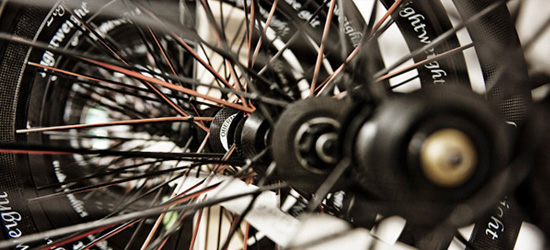
Owing to its structure, carbon fibre cloth allows us to sculpt and shape complex 3D forms such as bicycle rims, which, made out of aluminium for instance, would be exceptionally heavy. Carbon rims make for a great hill-climbing wheel. The lightest form a rim can take is in tubular form, requiring the rider to glue his/her tyre to the rim. Lightweight sell a pair that weigh a total of 940g, for both wheels!
Aerodynamic benefits
As previously mentioned, carbon allows us to create deeper, more complex shapes, perfect for aerodynamic bicycle rims, yielding considerable advantages over the traditional box-section shaped alloy rim. There have been hundreds of wind tunnel tests performed and reams of data produced. Whether road racing, time trialling or if you just want to go faster for free on the flat, investing in some aero wheels will reward you with some free speed, and even more, the faster you go.
Ride quality and performance
A good quality carbon wheel will be laterally much stiffer than its aluminium counterpart – perfect for the sprinters amongst us who want every last watt of power transferring to the road.
Choice of widths
Recent years have seen the introduction of wider tyres in the pro peloton, with riders often choosing a minimum tyre size of 25mm, and many on 28mm as a standard. A wider rim gives the tyre more support than a narrower rim, improving the feel of the ride and offering more grip. You’d be forgiven for thinking that a wider tyre at a lower pressure would mean increased rolling resistance, but it is, in fact, all to do with the shape of the contact patch on the road. Gone are the days of 19mm tyres at 120psi!
Early carbon fibre wheels were famous for their lack of braking response, owing mostly to excessive heat build-up as the pads try to shed water from the rim. Modern engineering techniques have helped lesson this issue, but on long, sustained, mountain descents where the rider is likely to be unfamiliar with the road and therefore more likely to be ‘riding’ the brakes, combined with braking heavily from speed on the way into corners, we are still asking a lot of our rims. Improvements have been made with carbon, ceramic and organic pad compounds, some only useable on specific rims, but a decent aluminium rim with a standard rubber brake block will always out-perform it’s carbon rival.
Durability
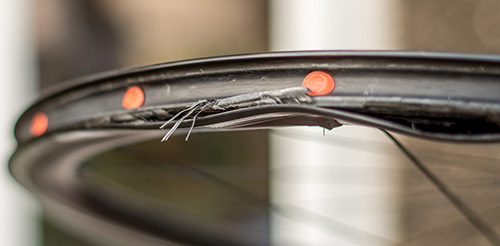
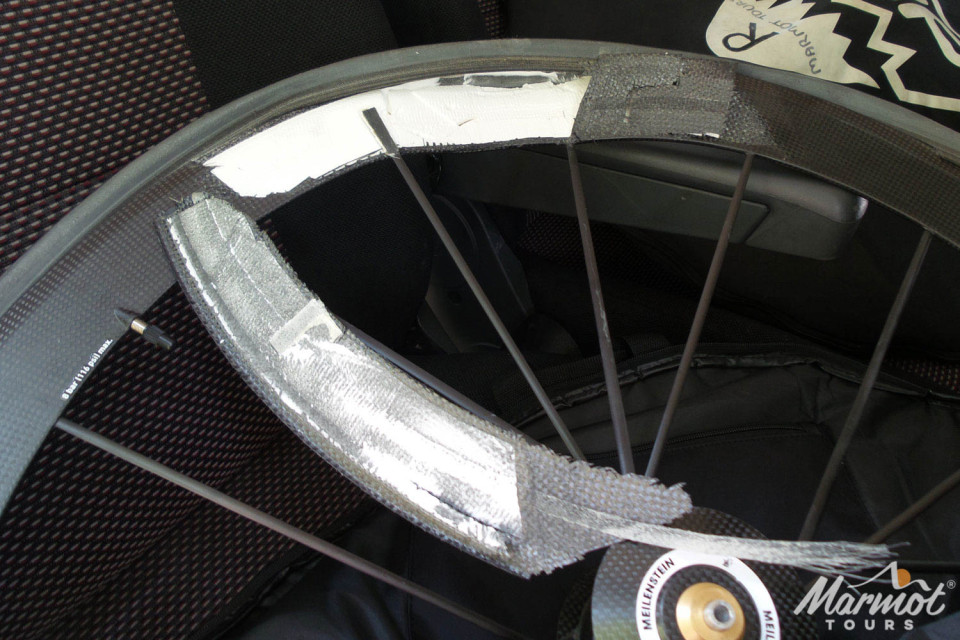
Having mentioned excessive braking and heat buildup, we have to mention delamination. Delamination is the 'death of a carbon wheel' and is essentially caused by the glues between the layers of carbon heating to the point of failure, as heat buildup caused by the friction of pads against the rim spreads throughout the wheel. On Marmot Tours cycling holidays we’ve personally experienced wheels delaminating whilst descending at speed and it’s one of the most dangerous situations a rider can find themselves in.
Wheels made from carbon fibre with an alloy braking surface (Shimano C24 for instance) tend to hold up better to delamination, but the alloy and carbon are still glued together, so are still susceptible to risk.
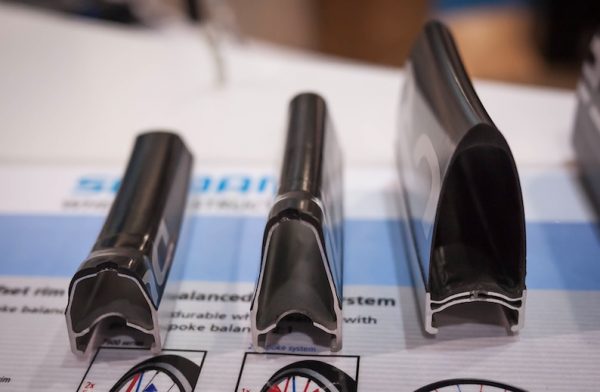
A cross-section of the carbon laminated clinchers from Dura C24, C35, and C50 wheelsets.
Unlike carbon rims which are more likely to crack (think rim-strike having ridden over a deep pot-hole), aluminium rims are more likely to dent, remaining rideable until a replacement can be sought. A heavily crashed carbon wheel will be somewhat of an unknown quantity with its potential damage hidden between layers of carbon, invisible to the human eye, where-as an alloy rim is easier to visually inspect.
Break a spoke and an alloy rim will bend. Break that same spoke on a carbon wheel however and all of that uneven tension will transfer onto the remaining spokes, stressing them heavily. Yes it will be laterally stiffer than an alloy wheel and therefore ‘look’ less damaged, but will it make it that 30km home?
Weight
A high-end set of carbon tubulars is certainly going to appeal to the climbers out there, but the fact remains that a lot of the cheaper and lower-end carbon wheels tend to actually weigh more than a quality pair of aluminium wheels. If you want the lightest wheels but are on a budget, then aluminium is still the way to go.
So, back to the original question: which wheels should I bring on my cycling holiday in the mountains?
We’d say that the ideal wheels to be ridden in the mountains would be a lightweight alloy set, with new and properly adjusted brake pads. For those who are particularly weight-concious, Shimano’s carbon-laminate wheels work exceptionally well and help lessen the weight ever-so slightly more, whilst still retaining the alloy braking surface.
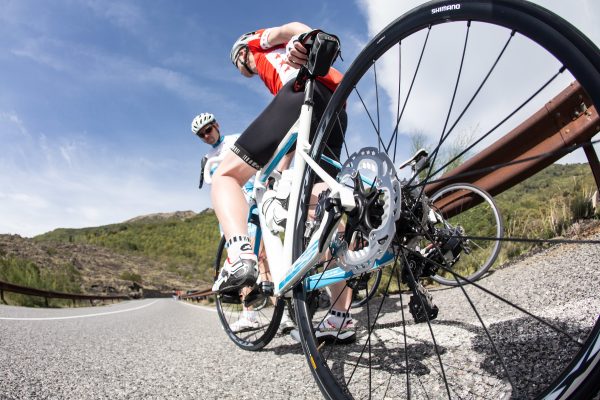
In recent years, disc brakes have come to the fore and are now popping up on more and more bikes, road and otherwise. Ridding the bike of the usual clincher brake caliper allows the rider to use a wider tyre. The disc being centered on the wheel also keeps it away from the usual road dirt and grime, and the introduction of hydraulics to the mix allows the rider to benefit from predictable and controlled braking, whatever the conditions. For many, they are the inevitable evolution of braking, and right now with the UCI having just approved their use in professional racing again, they seem like the ultimate braking solution.
Daily wheel maintenance
Ultimately, whichever wheels you choose to use, you should ensure that they are straight, round and true, and that you start your cycling holiday with brand-new pads. Daily maintenance is crucial to keep them clear of debris, as is the use of common sense when descending. If the conditions are poor, slow down, raise your line of sight and brake earlier.
Finally, for more info on the various types of carbon fibre, how it's used, its benefits and limitations, check out the video below from one of Australia's most well-respected carbon experts.